
I’ve been sharing some pictures and stories on social media about our three-week trip to the UK. We traveled in England, Wales, and Scotland, punctuated by the excitement of an emergency appendectomy for Betsy in Edinburgh. The surgery, four-day hospital stay, and the resulting physical limitations pretty much shut down the last half of our trip. But, if vacations are about gaining new experiences and stories, we accomplished the mission.
One of my new experiences was driving in Great Britain. After a couple of days in Bath, we rented a car to drive through the Cotswolds and up into north Wales. When the agent brought our Vauxhall Corsa around, Betsy and I were cracking up – not because it was bright orange, but because it bore a striking resemblance to our orange 2013 BMW X1 back home.
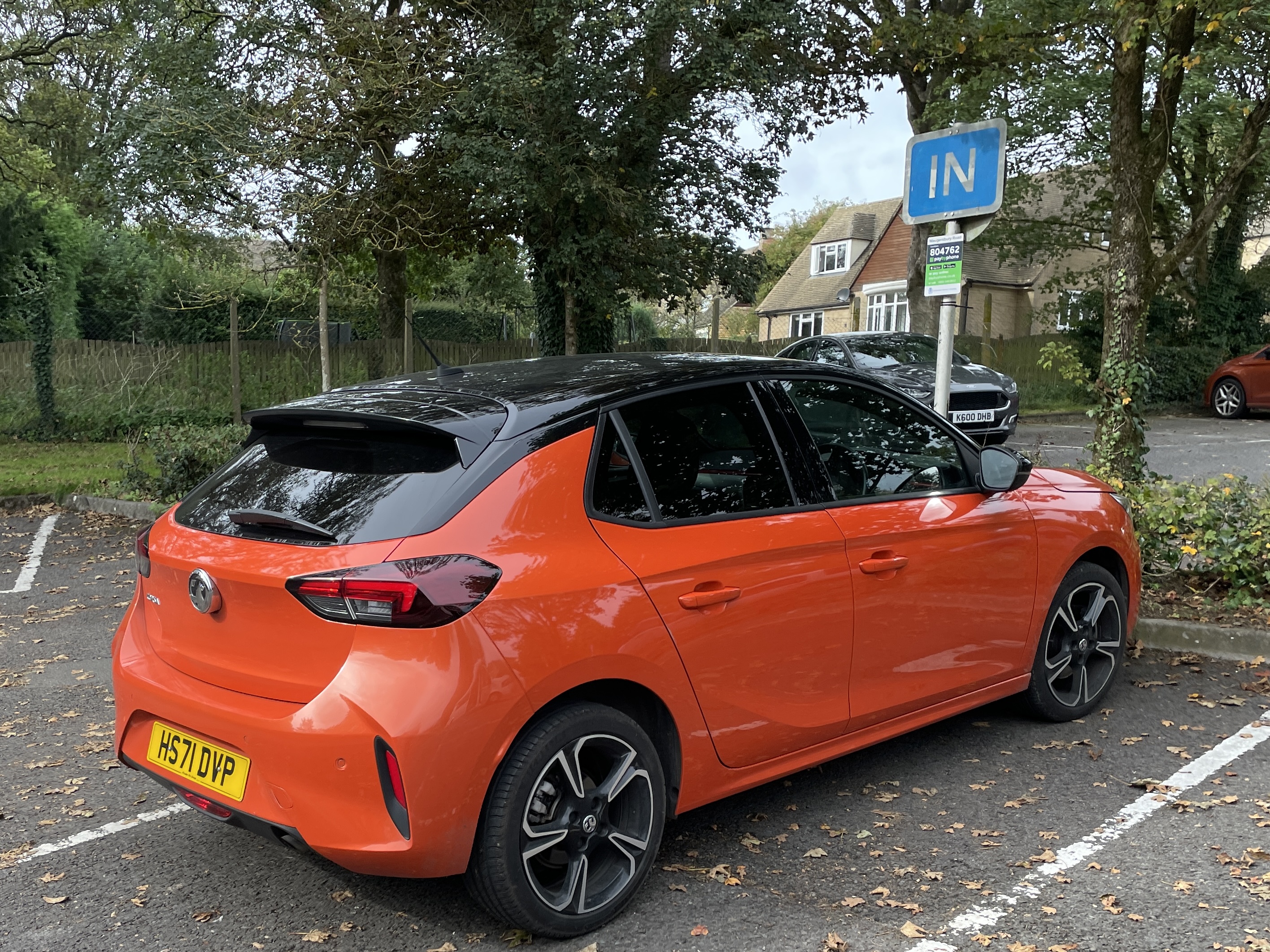
Having never driven on the left side of the road or used a manual gearshift on the opposite side of the steering wheel I was a little anxious, but I was ready for the challenge. In about five minutes, I was very happy I had signed up for every conceivable form of insurance coverage, because I was certain I was going to damage their car, and maybe other cars around me.
Turns out the problem wasn’t really driving and shifting on the left – that was a pretty simple adjustment – it was the fact their roads are incredibly narrow. Originally built to carry horses and wagons, these roadways now host Vauxhalls and tour buses, with speed limits up to 60 mph. I hit a few curbs making my way out of the city, but managed (somehow) to avoid hitting anything else. It didn’t get better when we got into the countryside. The average width of the “A” roads we were on is 5.5 meters (18 feet), with many of them getting as narrow as 5.1 meters. The Vauxhall measures 198 cm (6.5 feet) mirror-to-mirror. So, when two compact cars meet on these roads, there’s about five feet of extra room to share. When you put some space on each side, to avoid the curbs, high hedges, or stone walls that usually begin right at the edge of the road (there’s rarely ever any kind of hard shoulder), that gives you 1.5-2 feet to clear the mirror of the oncoming car. Since much of the traffic is larger than the Corsa, like larger cars and tour buses, the challenge gets harder. The average bus in the UK measures about 8.5 feet in width. When we met a larger vehicle at 50-60 mph, we often had less than a foot separating us. I discovered that British drivers are more competent than most Americans. We are used to lots of room, and no one crowding us very much, especially those of us who live in mid-sized cities and smaller towns in the Midwest.
It reminded me of the street I live on in Springfield. It’s a little narrower than normal. With cars parking on one side, it is tricky for two cars to pass each other, at least with our cultural sense of entitlement when it comes to space. There’s actually enough room for two cars to pass, you just have to be careful. It has become a discussion on our neighborhood Facebook page before, and those who advocate for the northbound lane to pull over and let the oncoming traffic by are clearly driven by a more rural/suburban American mentality. And they can get very aggressive about it. “My space is sovereign. You shall not pass!” I’d love to see them take on a Welsh roadway at 60 mph!
We saw this phenomenon in Italy years ago. Most Europeans on ancient, crowded walkways and staircases would simply share the space and rub shoulders if need be. Americans would often stand back and wait impatiently for others to clear the lane so they could move through unimpeded. Partly because they were physically larger, on average, but mostly because the legacy of individualism and capitalism in our culture says that your personal space – the boundaries of which are determined by you – belongs to you and should not be infringed upon by others. To share space is to place an expectation on others that in some way were are in this together, instead of our preferred ethos, that the only person I should care about is myself, and everything is a competition for scarce resources.
While I was driving in Wales, it occurred to me that a lot of these deep structures of privilege and the implicit biases we develop through a lifetime of wide open spaces were affecting the centering function of my inner gyroscope when it came to the left-right issue. I kept drifting to the left, (and not just because of my politics). It was partly for fear of head-on collisions, but also because my muscle memory would revert back to my old way of centering in a lane. If I didn’t remain mindful and intentional, I would drift back to a method of centering that was dangerous. I have no idea how good the stereo is in that Vauxhall, because all the hours I drove were spent in white-knuckled silence and focus on the road…well, except for Betsy’s crescendoing, “watch it, watch it, WATCH IT!” as she squenched up in her seat.
I found myself almost overwhelmed by the metaphors and lessons as I drove. If we spend a lifetime growing accustomed to centering and being centered a certain way – whether it’s driving or culture, or race, or gender, or sexuality, or economics, or religion, etc. – it is unlikely we’re going to change our implicit behaviors by just deciding to. It takes concentration and practice. It can be exhausting, but to avoid damaging ourselves and others, we need to give it our attention. I’ve found the concept of white privilege to be one of the hardest and most rewarding things to teach. For students who have never questioned their centering, it creates cognitive dissonance for them, can even make them angry. For most of them, once they discuss it a lot and start to mindfully address the issue, it starts to change the way they think.
This is what’s happening with school boards and state legislatures around the US. They’re hearing about these efforts to de-center the white, male, heterosexual, Christian perspective, and it pisses them off. Rather than learning and practicing a new way of being in the world, they just work to kill the messengers.
We need to keep our eyes on the road.
Discover more from Something Gigantic
Subscribe to get the latest posts sent to your email.
